
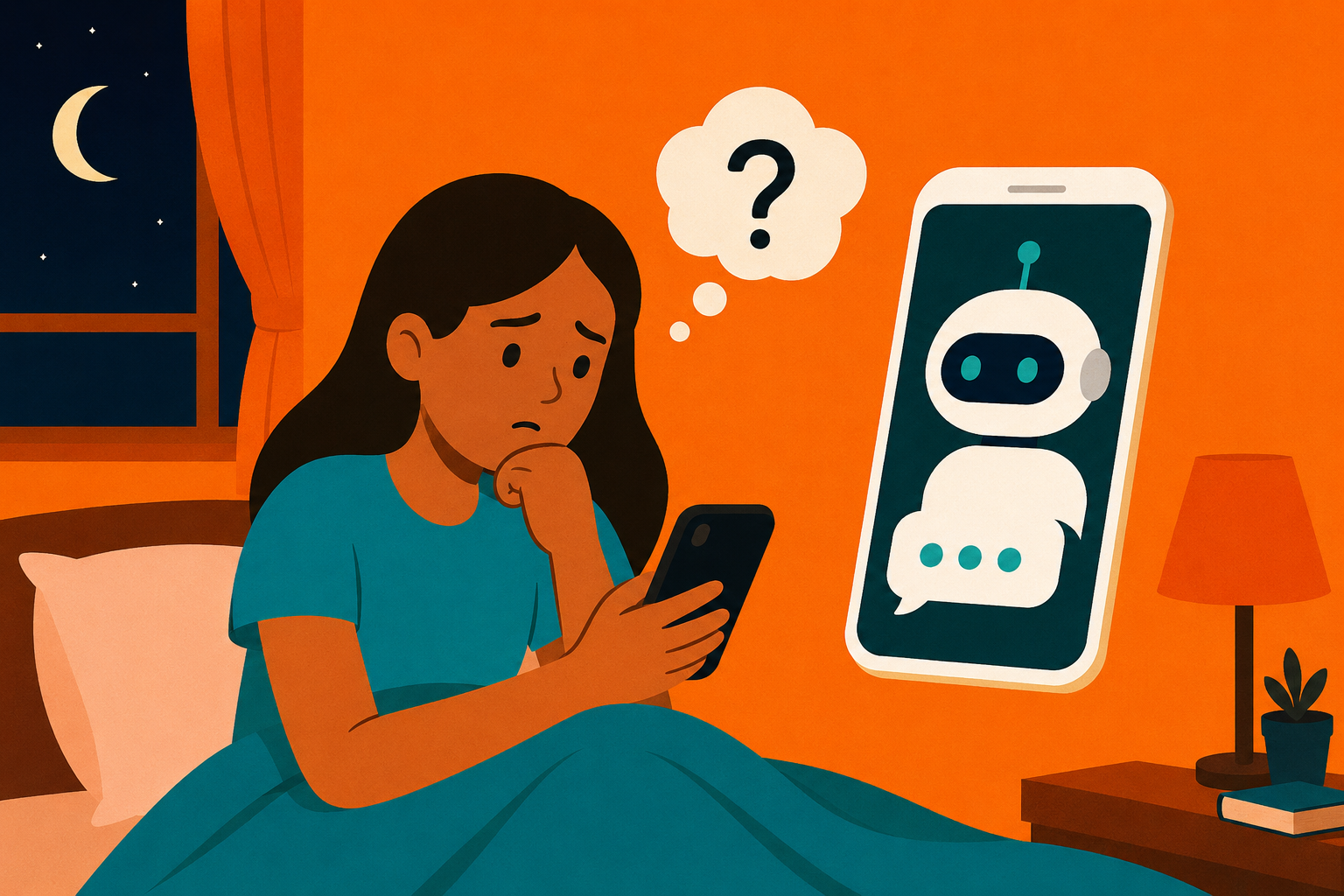
A year ago, the idea of a teenager asking a chatbot for help with anxiety, loneliness or low mood might have sounded unusual. Now, it is becoming normal.
New research published in JAMA Pediatrics found that 19.2% of 12–21-year-olds in the US had used AI chatbots for mental health advice — almost 1 in 5. That is up from around 1 in 8 the year before. Among those who had used AI this way, nearly 43% did so at least monthly, and almost two-thirds had not told anyone.
This does not mean every teenager using AI is in danger. It also does not mean parents should panic, confiscate phones, or ban every chatbot overnight. But it does mean we need to take the subject seriously.
AI is already part of many teenagers’ emotional world. The question is not whether they will use it. The question is whether they understand what it can and cannot do.
Why teenagers turn to AI in the first place
For many young people, AI has three powerful attractions: it is always available, it does not appear to judge, and it costs nothing.
A teenager lying awake at 2am may not want to wake a parent. They may not want to tell a teacher. They may be embarrassed to ask a friend. They may worry that saying “I feel anxious all the time” will lead to a big adult reaction. A chatbot feels private, instant and low-risk.
The American Psychological Association has noted that teenagers may turn to AI because it can feel safe, private and non-judgemental, while also stressing that human connection and adult guidance remain essential.
So the first parental response should not be outrage. It should be curiosity. If your teenager is talking to AI, they may be trying to meet a real need: reassurance, privacy, emotional language, or a space to practise saying something difficult.
That need deserves respect. But the tool still needs boundaries.
What AI does badly
The main risk is not that AI is “evil”. It is that it can sound confident, warm and personal without having the judgement, responsibility or context that real support requires.
A chatbot does not truly know your child. It does not notice that their mood has changed over several weeks. It does not remember the argument at school, the exam pressure, the friendship issue, the family context, or the subtle shift in sleep, appetite and confidence. Even when a system has some memory, it is not the same as a trained adult holding a full picture of a young person’s wellbeing.
Researchers in JAMA Pediatrics warned that perceived helpfulness may partly reflect AI’s tendency towards flattery or “sycophancy”, rather than the actual quality of its guidance. That matters, because good support does not always agree. Sometimes it gently challenges. Sometimes it slows things down. Sometimes it says, “This sounds bigger than a chat. We need to involve a trusted adult.”
Common Sense Media has gone further on AI companion apps, rating social AI companions as an “unacceptable” risk for under-18s and recommending they should not be used by minors. Their risk assessment highlighted concerns including emotional dependency, harmful advice, inappropriate content, and the tendency of some companion products to create attachment rather than encourage real-world support.
The Child Mind Institute also warns that chatbots can reinforce harmful thinking instead of challenging it, particularly for teenagers who are already lonely, anxious, depressed or isolated. Its guidance is clear that chatbots cannot do what a therapist does: assess risk, ensure safety, connect a young person to support, or reframe dangerous thinking in a clinically responsible way.
That is the gap parents need to understand.
AI can offer words. It cannot offer a relationship.
What a trained human coach does differently
A good coach, therapist or mental health professional does not simply respond to one message at a time. They build a picture.
They notice patterns across weeks. They hear what is said and what is avoided. They can spot when “I’m fine” does not sound fine. They can challenge unhelpful thinking without shaming the young person. They can help a teenager practise skills that transfer into real life: managing anxiety before school, having a difficult conversation, setting boundaries, improving sleep, reducing avoidance, or asking for help.
Most importantly, a trained human knows when coaching is not enough. They can identify when a teenager may need clinical assessment, safeguarding support, or urgent help.
That distinction is crucial. AI may be a useful tool for journaling, brainstorming calming strategies, or finding words for a feeling. But it should not become the main emotional support system for a teenager, especially one who is struggling.
Technology can support care. It should not quietly replace it.
Four questions to ask your teenager this week
The best conversations about AI are not interrogations. If your teenager thinks you are about to confiscate everything, they may simply hide it. Try asking calmly, perhaps in the car, on a walk, or while doing something else.
- “Do you ever use AI for advice when you’re stressed or upset?”
Keep your tone neutral. The aim is to open the door, not catch them out. - “What kind of things does it help with?”
They may say homework, friendships, confidence, sleep, anxiety, body image or loneliness. Listen carefully before reacting. - “Has it ever said anything that felt weird, too intense, or not quite right?”
This helps them think critically. Common Sense Media’s guidance for parents stresses that AI chatbots can miss warning signs and may encourage unhealthy thinking instead of pushing back. - “Who would you talk to if it gave advice that worried you?”
This is the safety question. Help them name real people: you, another parent, a teacher, a coach, a GP, a counsellor, or a trusted family member.
The goal is not to make your teenager feel foolish for using AI. The goal is to help them understand its limits.
Technology is a tool. Support is a relationship.
AI is not going away. For teenagers, it may become as ordinary as search engines or social media. Some will use it creatively and safely. Some will use it privately when they are struggling. Some will become too dependent on a tool that is always available but never truly accountable.
Parents do not need to become AI experts overnight. But they do need to stay close enough to ask good questions.
A calm conversation this week could tell you a lot: what your teenager is carrying, where they look for comfort, and whether they need more human support than they are currently getting.
AI never sleeps — but it also never truly knows your child. Our MSc-trained coaches do.