
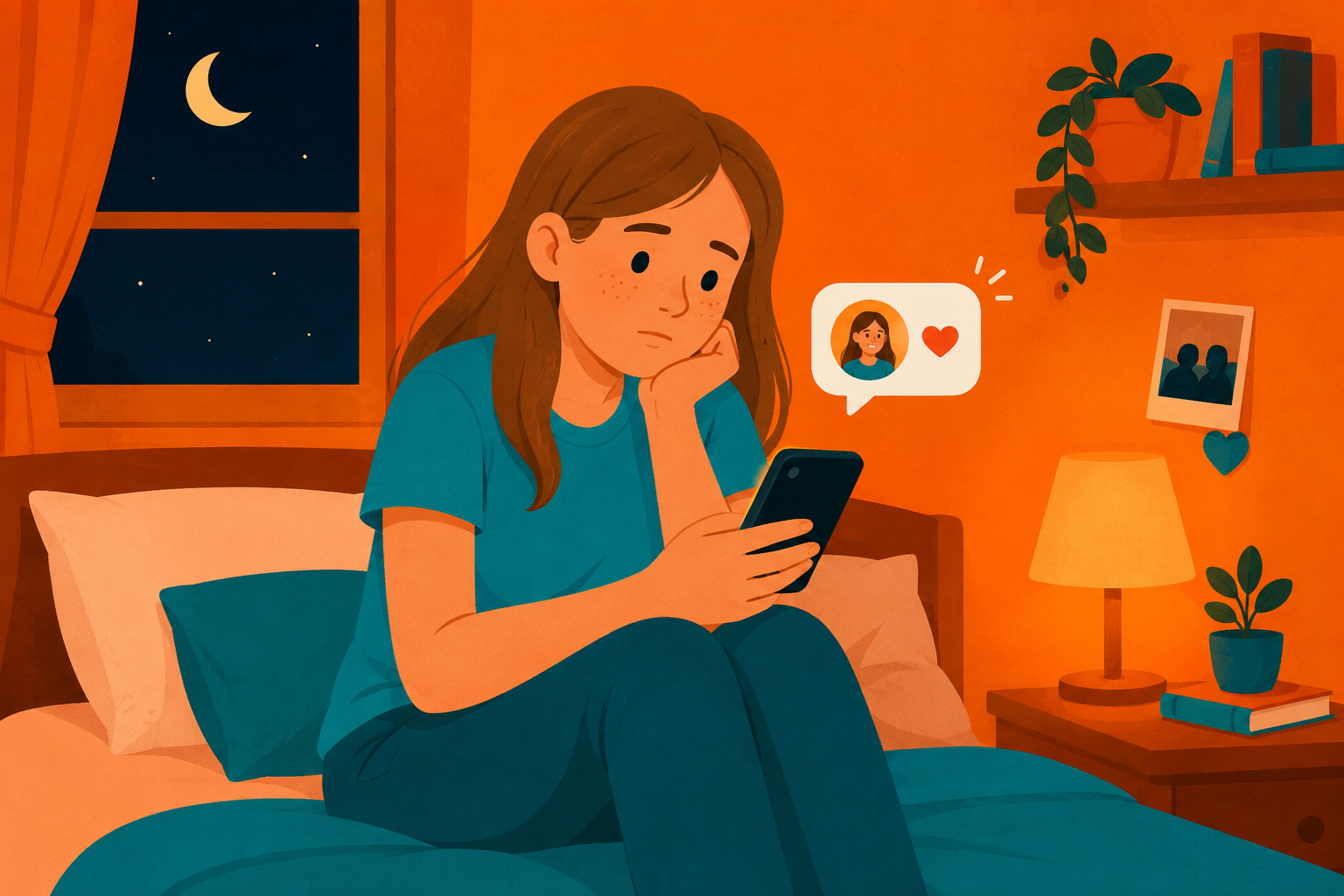
A teenager can spend all day surrounded by classmates, exchange hundreds of messages and still go to bed feeling completely alone.
Loneliness is not simply the absence of people. It is the painful gap between the connection someone has and the connection they need. A teen may have a busy group chat or full social calendar, yet feel unseen or unable to be fully themselves.
Adolescence appears to be one of the most vulnerable periods for loneliness. The World Health Organization’s Commission on Social Connection reports that one in six people globally experiences loneliness, with the highest rates among adolescents and young adults — around one in five. Today’s teenagers are not weak, ungrateful or simply “too online”. They are navigating an intense stage of development in a social world that rarely slows down.
Why teenagers can feel lonely even when they have friends
During adolescence, identity is under construction. Teenagers are working out who they are, where they belong and how much of themselves it is safe to reveal. Meanwhile, childhood friendships may fade, new groups form and the fear of rejection can sharpen.
Research distinguishes loneliness from social isolation. Isolation describes how much contact a person has. Loneliness describes how that contact feels. This is why “But you have loads of friends” often lands badly: it answers a headcount problem when the teen is describing an emotional one.
Friendship quality matters enormously. Support, trust, validation and feeling understood can protect against loneliness, while conflict and one-sided relationships can deepen it. Ten shallow connections may not provide what one emotionally safe friendship can. A systematic review of adolescent friendships found consistent links between friendship quality and measures of wellbeing, including loneliness, mood, self-esteem and life satisfaction.
Online life can intensify the problem, but not in the simplistic way adults sometimes assume. Social media can maintain real friendships and help teenagers find communities they cannot access locally. It can also expose them to comparison, exclusion, cyberbullying and polished evidence that everybody else is having a better time. Ask not only, “How many hours are they online?” but, “How do they feel afterwards?”
School holidays can make these feelings louder. Routine disappears, casual contact stops and friendship groups scatter. A teen already on the edge of a group may suddenly have no easy way back in.
What does not help a lonely teenager
When a parent is worried, the instinct is to fix the situation quickly. Yet some common responses add pressure rather than connection.
“Just go and talk to people” makes friendship sound effortless.
“You spend too much time in your room” can turn a symptom into a character flaw.
Forced socialising may put a teenager among people without creating safety or belonging. And “Everyone feels like that” may close the conversation just when it has begun.
Taking away a phone is not a complete loneliness strategy either. For some teenagers, online contact is their most consistent bridge to friends. Boundaries may be useful, especially when digital experiences are harmful, but removing the bridge without building another one can leave them more isolated.
The most important shift is from judgement to curiosity.
A lonely teenager does not need proof that they should be grateful. They need the experience of being understood — and help creating one relationship in which they can be known.
What actually helps
Start by naming the feeling without making it an identity
Try saying: “You seem a bit disconnected lately. Is that close to how it feels?”
This is gentler than “You have no friends” or even “You’re lonely”, which can feel exposing or permanent.
Listen before offering solutions. The real problem may be that your teenager has friends but does not trust them. They may have been excluded, feel different from the group or simply not know how to move from acquaintance to friendship.
The right help depends on understanding which kind of connection is missing.
Aim for one or two quality connections
The goal is not popularity. It is reciprocity: someone who responds, notices, shares and makes room.
Help your teen identify the person with whom they feel most at ease, even if the friendship is not yet close. Then make the next step small: send one message, invite one person for food, play a game together or arrange a short outing.
“Who could you spend two comfortable hours with?” is often more useful than “Why don’t you invite everyone?”
Use shared activity to take pressure off conversation
Conversation can feel intense, particularly for a teenager who is anxious, neurodivergent or out of practice. Connection often grows more naturally while people do something side by side.
Look for structured activities with repeated contact: sport, art, volunteering, gaming, coding or a part-time job. Familiarity lowers the risk of each interaction, while a shared task provides something to talk about before more personal conversation develops.
Let the activity fit the teenager. Signing a quiet, creative child up for a loud team sport simply because it looks “social” may reinforce the belief that they do not belong.
Coach the skill, not the personality
Connection is not a personality type. It is a set of learnable behaviours: starting a conversation, showing interest, sharing gradually, handling awkward pauses, repairing a misunderstanding and inviting someone to meet again.
A parent can help rehearse a message without taking over. Ask: “Do you want help drafting it, or do you want me just to sit with you while you send it?”
That preserves autonomy while reducing the emotional load.
Evidence reviews suggest that simply increasing social contact has limited effects when deeper barriers remain. More promising approaches strengthen social and emotional skills, supportive relationships and the thought patterns that can trap a young person in expecting rejection and withdrawing.
Know when loneliness needs professional support
Occasional loneliness is part of being human. Persistent loneliness can become entangled with depression, anxiety, sleep problems, withdrawal and hopelessness.
Seek additional help when your teenager has stopped enjoying things, is avoiding school, is sleeping or eating very differently, talks about being worthless, or seems unable to reconnect despite support.
Ask directly and calmly about self-harm or suicidal thoughts when you are concerned. Seek urgent professional or emergency support when there is an immediate risk to your teenager’s safety.
Hope is practical
A teenager who feels alone today is not destined to stay lonely.
Friendships change. Environments change. Skills grow. One safe relationship can become the place from which confidence returns.
The job is not to manufacture a bigger social life overnight. It is to reduce shame, understand what kind of connection is missing and create repeated, manageable opportunities for something real to grow.
Connection is a skill — and skills can be coached.